Baptism
"Baptism is not what saves you, but it does declare who did."


The 4 M's Of Baptism
Why are we baptized? Baptism is an act of Christian obedience and an important step in spiritual growth. Jesus said, “If you love me, keep my commandments,” reminding us that love for Christ and the desire to please Him should be our highest motivation. Baptism does not bring about or contribute to salvation; rather, it is an expression of gratitude to God for His saving grace. We recognize that we can add nothing to the finished work of Christ on the cross, yet through baptism we move forward in obedience and publicly identify with Him.
We are encouraged toward baptism by the example of Christ, the witness of New Testament believers, and the clear teaching of Scripture. Jesus began His public ministry with baptism, not because He needed salvation, but to identify with those He came to save. Throughout the New Testament, baptism was the immediate response of new believers who desired to obey Christ. Scripture also explains its meaning, showing that baptism symbolizes our union with Christ in His death and resurrection and serves as a public declaration of personal faith. Ultimately, our motive in baptism is obedience to Christ and bringing glory to Him and His church.
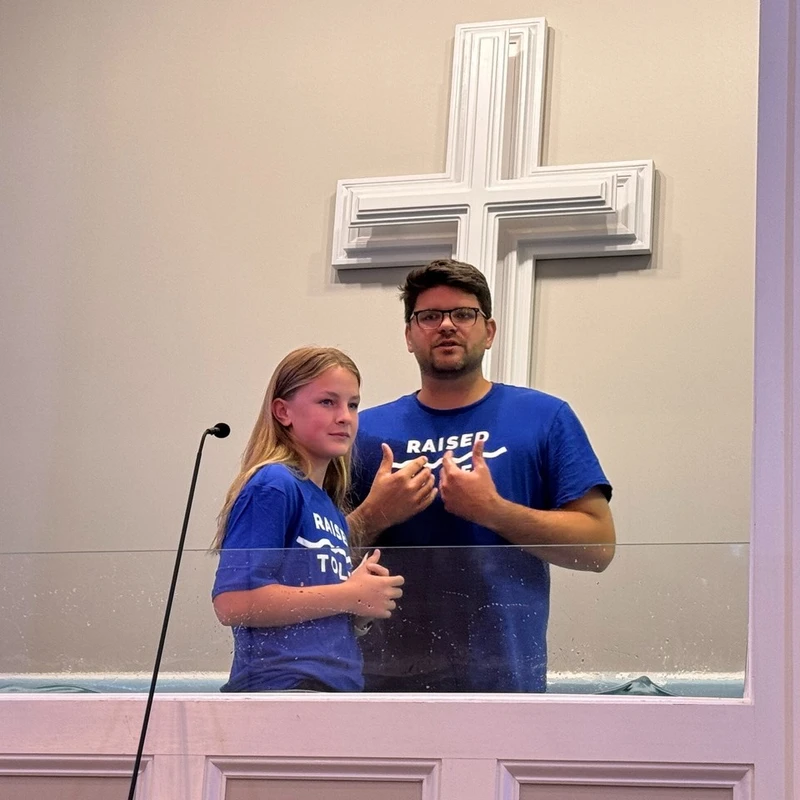
How should baptism be done? Although this has been a point of confusion for some, God’s Word gives clear guidance on the method of baptism. Baptism is intended to be a picture of our identification with Christ, and any alteration of this picture can interfere with the message the ordinance is meant to communicate. The word “baptize” comes from the Greek word baptizo, which most accurately means “to immerse,” “to submerge,” or “to place under.” In the ancient world, this word was commonly used to describe washing clothes by completely submerging them in water. Scripture also notes that when Jesus was baptized, He came up out of the water, and that Philip and the Ethiopian went to a place with much water, with the Jordan River often serving as a setting for baptism. Baptism by immersion powerfully illustrates the death, burial, and resurrection of Christ, as well as the believer’s death to sin and former way of life and their rising to live as a new creation in Him.
If baptism has no saving power, then what is its significance? Baptism is referenced frequently in the New Testament, showing its importance for every follower of Christ. It serves as a public declaration of faith in the Lord Jesus Christ, since Scripture calls believers to profess Him openly and not live as “silent saints.” For this reason, baptism should closely follow salvation as a testimony to the transforming work of Christ in one’s life. It also provides a powerful illustration of Christ’s death, burial, and resurrection, reminding believers of the payment, pardon, purity, and power He has made available through faith, as well as symbolizing a believer’s break with the past and the beginning of new life in Him. Additionally, baptism is a personal identification with Christ and His church, much like a wedding ring publicly represents a person’s commitment in marriage. While neither a ring is necessary for marriage nor baptism for salvation, both function as visible testimonies of deep commitment. In this way, baptism becomes a key expression of both identity and obedience in the Christian life.
When should a follower of Christ be baptized? God’s Word teaches us as soon as possible after we put our faith and trust in Jesus Christ. This is the New Testament pattern (Acts 2:41). Baptism should always follow salvation, never precede it. The experience of baptism, no matter how sincere, is inadequate if it has occurred prior to one’s understanding of a personal relationship with Jesus Christ